
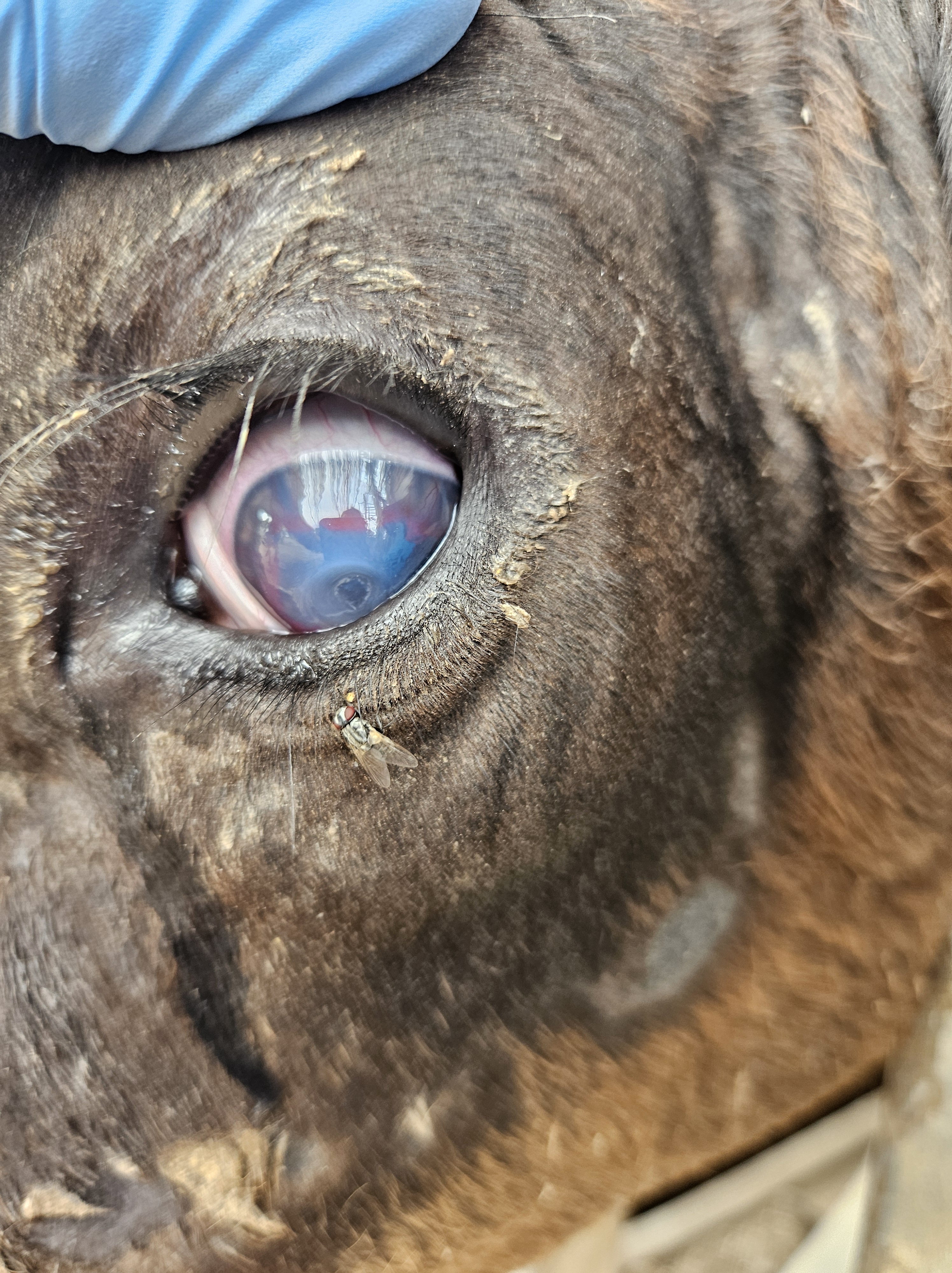
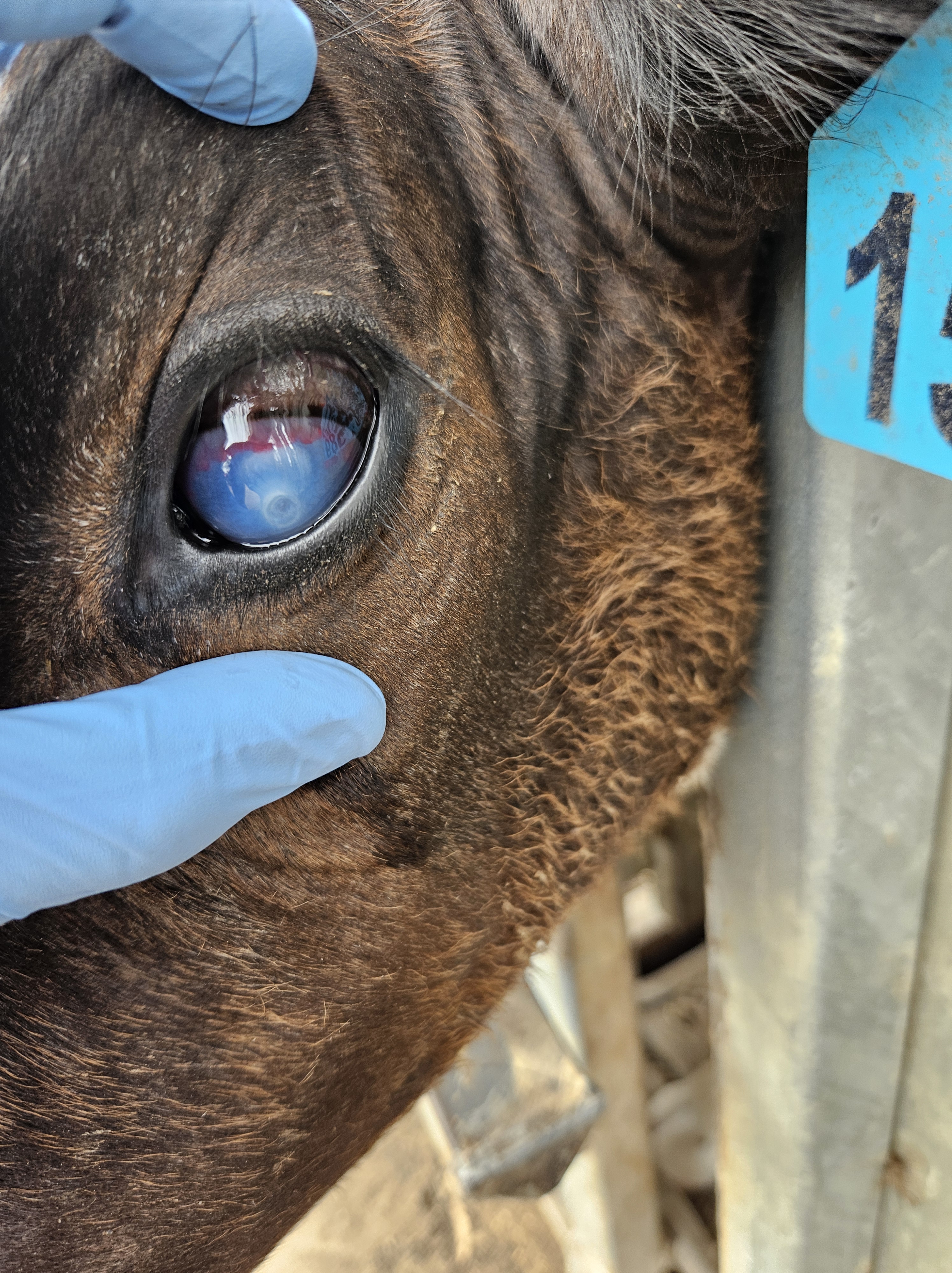
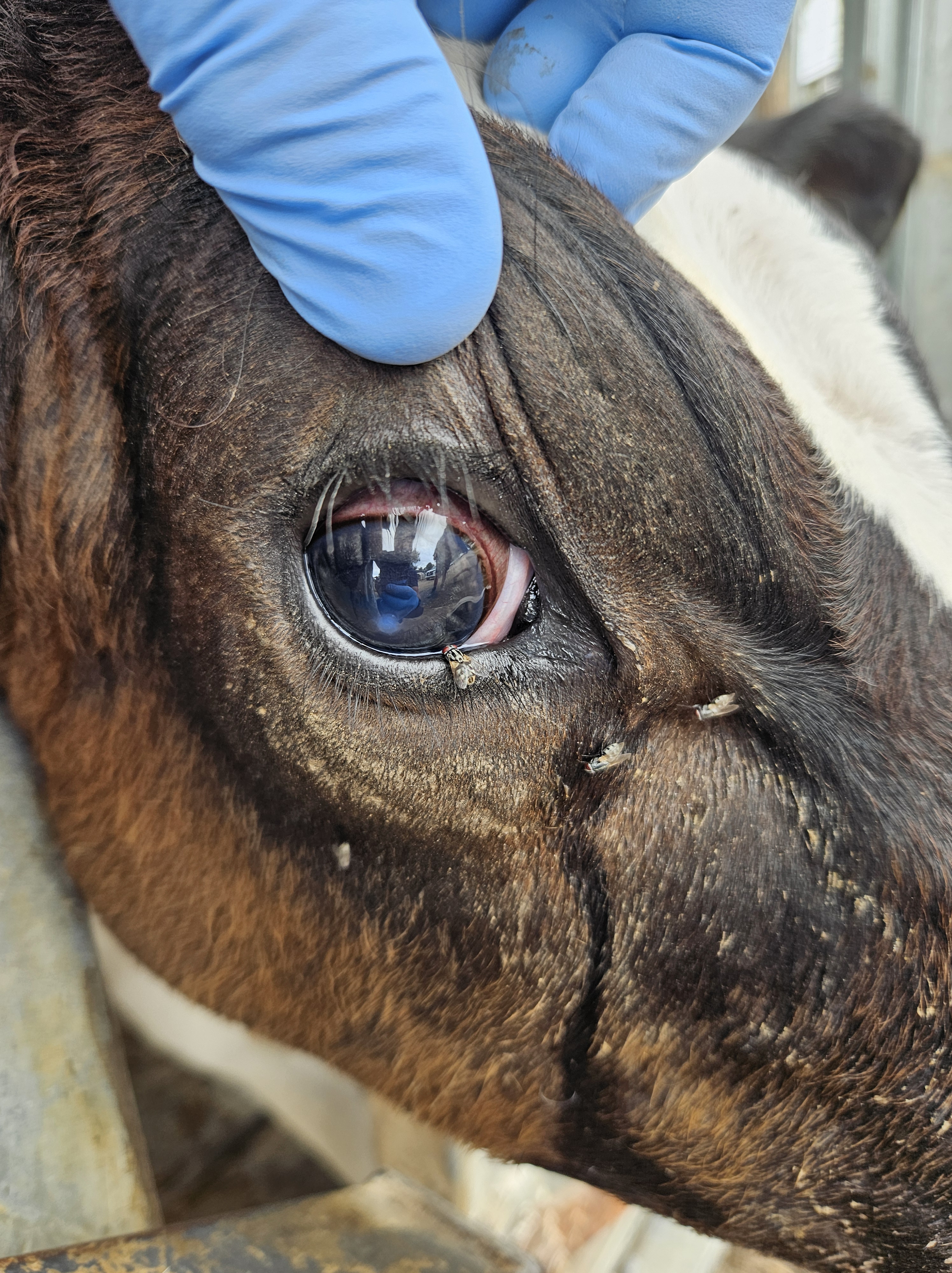
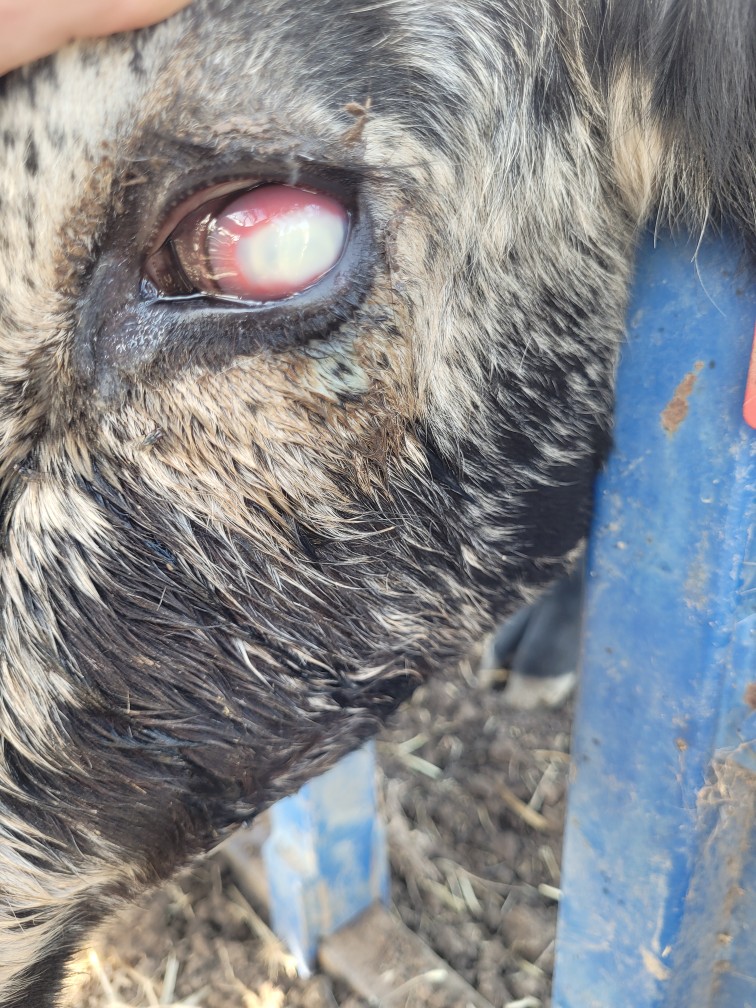
Infectious bovine keratoconjunctivitis overview:
Infectious bovine keratoconjunctivitis (IBK) is one of the most common contagious ocular diseases seen in cattle. It is of importance due to the economic impact it can have on herds (in terms of production losses and cost associated with treating affected cattle) and the impact on animal welfare.
IBK is a multifactorial disease and is associated with a range of host and environmental factors.
Specific risk factors include:
Damage to the cornea (UV light, dust, pollen, grass seed awns and flies)
Cattle < 2 years of age (immunologically naïve)
Breed (Bos Taurus >>> Bos indicus)
Reduced pigmentation around the eye
Cattle grazing in southern Australia
High stocking rates
High fly (bush fly (Musca vetustissima) and house fly (Musca domestica)) burdens
Warmer months of the year
After rain events
The bacterial species Moraxella bovis (gram-negative rod-shaped organism), is thought to be the primary cause of IBK which as a surface pili and haemolytic endotoxin (cytolysin) with corneotoxic properties (proteolytic enzymes) which all facilitate attachment to the cornea and disease of the eye. Moraxella bovoculi has also be isolated from cattle with IBK lesions. Secondary IBK pathogens include Moraxella lacunata and Moraxella catarrhalis.
Clinical signs:
Clinical signs of IBK include the following:
Increased lacrimation (increased tear production), blepharospasm (closing eyelids) and photophobia
Initial lesions are central corneal ulcers that rapidly enlarge and become vascularised (5 – 7 d post infection), granulation protrusion and purulent tissue
Healing results in a formation of an extensive scar that can permanently impair vision
May lead to globe rupture (2 % untreated cases)
Infection appears to provide protection for next season
Prompt topical treatment often prevents the disease progressing any further.
Treatment:
Treatment of the individual consists of the following:
For mild early cases (corneal ulcers ≤0.5 cm) treat with topical Benzathine Cloxacillin 250-375mg – ¼ to ½ a tube applied 72 hrs apart (the therapeutic concentrations persisted for at least 56 hours). Both eyes should be treated and the cream in the unaffected eye first. Pinkeye patches over the affected eye(s) can prevent further irritation due to flies, dust and UV light and reduce the transmission between calves.
For more severe cases (corneal ulcers >0.5 cm), calves require an anti-inflammatory (such as meloxicam), long-acting antimicrobial and topical Benzathine Cloxacillin. Pinkeye patches over the affected eye(s) or third eyelid flap/ temporary tarsorrhaphy is also recommended to protect the eye and reduce transmission.
Note: Subconjunctival and sub-bulbar injections have been used, however, it has not been demonstrated to be superior to topical and systemic treatment.
All treated animals should be segregated to prevent further transmission in the herd.
Treatment failure may reflect delayed therapeutic intervention or inappropriate route or frequency of antimicrobial therapy or antimicrobial resistance.
Several antibiotics are used in the management of IBK. The three common antimicrobials, their suggesting dosing regimens, their advantages and disadvantages are outlined in the table below.
Systemic (injectable) antibiotic therapy choice:
Oxytetracycline -20mg/kg IM Best to repeat in 72 hours- Advantages: Level of resistance level known (0-3.5%) Effective at treating IBK, Disadvantages: Repeat yarding and high volume to administer
Florfenicol – 40mg/kg SC one off or 20mg/kg IM repeated in 48 hours (IM dose shown to be more effective), Advantages – Level of resistance level known (0-3.5%) Low volume to administer Effective at treating IBK, Disadvantages: Repeat yarding
Tulathromycin – 2.5mg/kg SC – Advantages: Single yarding, low volume to administer and effective at treating IBK, Disadvantages: Unknown level of resistance
Prevention is based around:
Vaccination: The vaccine used in Australia contains formalin inactivated cultures of three Moraxella bovis isolates (FLA64, SAH38, EPP63) in an oil emulsion adjuvant. Vaccine study shows that the vaccine provides cross protection against 64% of Australian field Moraxella bovis isolates, which were identified on 77% of farms investigated for pinkeye outbreaks. It is advised to administer 2mL via subcutaneous or intramuscular injection 3-6 weeks prior to the pinkeye season and it can be used in calves from 2 weeks of age.
Autogenous vaccines can be manufactured. These vaccines are made from bacteria cultured from ocular swabs. These autogenous vaccines are strain specific and therefore farm specific.
Fly control: Fly control is generally carried out via chemical backline treatment. Other measure of fly control consists of fly traps, predatory wasps and beetles.
Minimizing risk factors: If certain risk factors can be identified, strategies can be implemented to reduce the risk of IBK in herds.
Herd infectious bovine keratoconjunctivitis outbreaks:
In herd outbreak situations where > 15-20% of the herd affected, it is often required to blanket treat all animals with a long-acting antibiotic. This will assist in treating those affected, reduce the spread between calves and eliminate infection of carrier animals.
Fly control is important.
Resources:
Angelos JA. (2015). Infectious Bovine Keratoconjunctivitis (Pinkeye). Vet Clin Food Anim 31 (2015) 61–79
Brown, M. H., Brightman, A. H., Fenwick, B. W., & Rider, M. A. (1998). Infectious bovine keratoconjunctivitis: a review. Journal of Veterinary Internal Medicine, 12(4), 259-266.
Emarcora, M., Morassi, R., Soriolo, A., Piva, R., Bregoli, M., & Schiavon, E. (2010). Efficacy of tulathromycin in a outbreak of infectious bovine keratoconjunctivitis. Large Animal Review, 16(4), 163-165
Kneipp, M., Green, A. C., Govendir, M., Laurence, M., & Dhand, N. K. (2021). Risk factors associated with pinkeye in Australian cattle. Preventive Veterinary Medicine, 194, 105432.
Hille, M. M., Spangler, M. L., Clawson, M. L., Heath, K. D., Vu, H. L., Rogers, R. E., & Loy, J. D. (2022). A five year randomized controlled trial to assess the efficacy and antibody responses to a commercial and autogenous vaccine for the prevention of infectious bovine Keratoconjunctivitis. Vaccines, 10(6), 916.
House, JK. (2010). How to handle Pinkeye. Livestock Veterinary Teaching and Research Unit, The University of Sydney, 410 Werrombi Rd, CAMDEN, NSW 2570
McConnel, C. S. (2005). Australian Bovine Keratoconjunctivitis (Pinkeye) Survey, A thesis submitted in fulfilment of the requirements for the degree of Master of Veterinary Clinical Studies. University Veterinary Centre Camden, Faculty of Veterinary Science, University of Sydney.
McConnel, C. S., Shum, L., & House, J. K. (2007). Infectious bovine keratoconjunctivitis antimicrobial therapy. Australian veterinary journal, 85(1‐2), 65-69.
Snowder, G. D., Van Vleck, L. D., Cundiff, L. V., & Bennett, G. L. (2005). Genetic and environmental factors associated with incidence of infectious bovine keratoconjunctivitis in preweaned beef calves. Journal of animal science, 83(3), 507-518.
 Cattle Vet AU
Leave a comment